Internal Audit Process Guide for Enhanced Organizational Success


What drives effective risk management in an American institution is not just technical knowledge but a well-structured internal audit process. There has to be three lines of defense: Operations, Support Functions and Internal Audit.
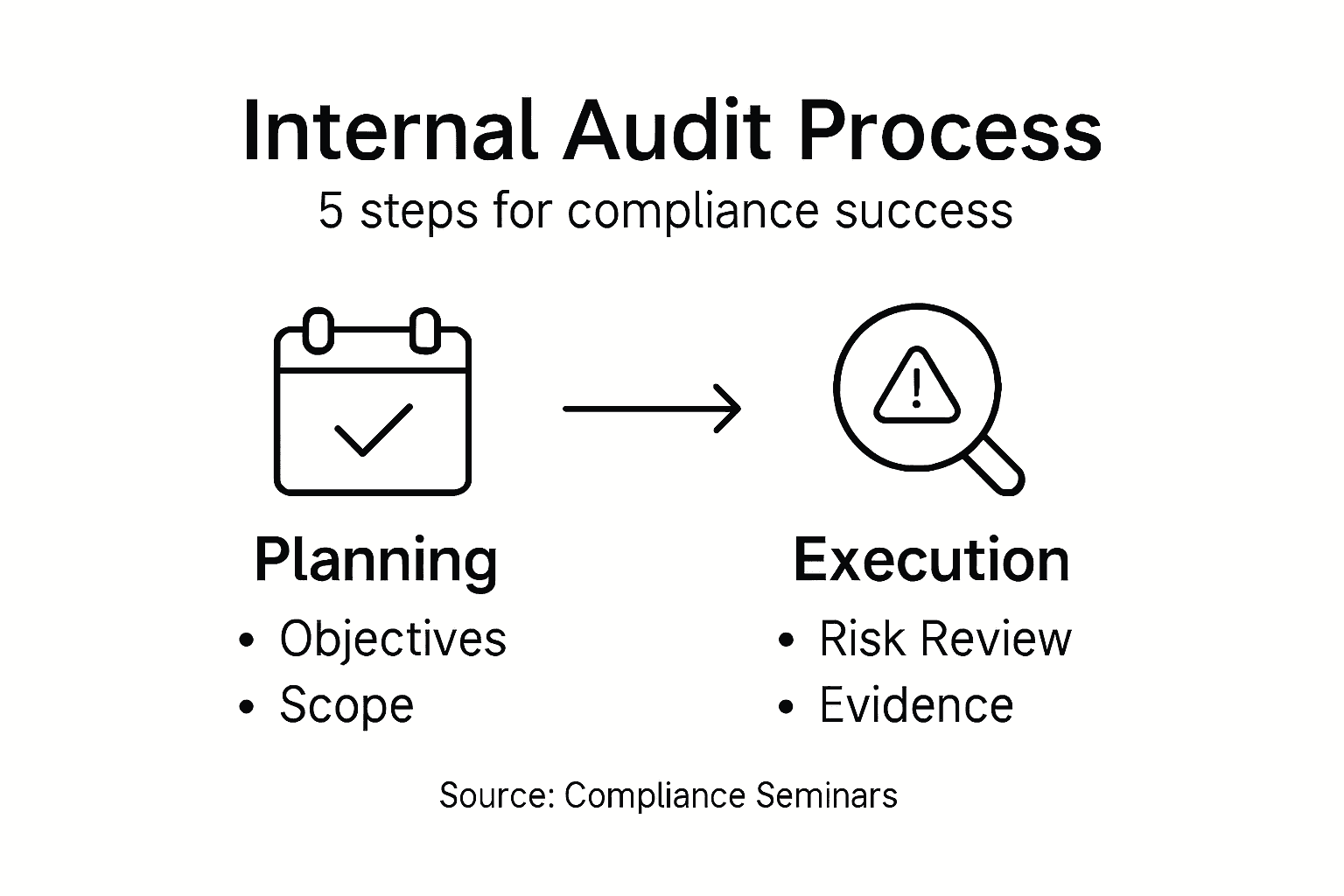
Clear audit objectives and a defined scope lay the foundation for focused internal audit, compliance efforts and robust controls. Aligning audit objectives with organizational goals and relevant risk assessments creates a strong roadmap for meaningful oversight and improvement. This guide provides practical steps to help internal auditors and compliance officers create targeted, reliable audits that support strong governance and regulatory confidence.
Table of Contents
Quick Summary
Key Point | Explanation |
1. Set Clear Audit Objectives | Audit objectives must be clear, measurable, and aligned with organizational risks and goals for effective focus. |
2. Create a Detailed Audit Plan | A structured audit plan with specific tasks and timelines ensures systematic investigation and accountability among team members. |
3. Conduct Comprehensive Risk Assessments | Management must create and maintain risk assessments. The IA function uses a varied techniques to identify gaps and evaluate risks thoroughly, allowing focused mitigation efforts in critical areas. |
4. Evaluate Internal Controls Rigorously | Assess the effectiveness of control mechanisms against identified risks to provide actionable insights for improvement. |
5. Communicate Findings Effectively | Tailor communication of audit results to different stakeholders, emphasizing actionable insights and facilitating organizational change. |
Step 1: Establish audit objectives and scope
Defining precise audit objectives and scope serves as the strategic roadmap for your entire internal audit process. When you establish these foundational elements, you create a targeted approach that aligns organizational goals with risk assessment and control evaluation.
Start by conducting a thorough review of your organization’s strategic priorities and potential risk areas. Audit objectives must be clear and measurable to ensure they provide meaningful insights. These objectives should directly connect to key organizational risks, operational challenges, and compliance requirements. The starting point are the risk assessments and control responses that management has created. Consider involving senior management and key stakeholders during this initial planning phase to gain comprehensive perspectives, validate the risk assessments and create a proposed audit focus that is consistent with both managements and the auditors prospective on the risks.
During the scoping process, define specific boundaries that outline exactly what will and will not be examined. This involves identifying critical systems, processes, departments, and timeframes that fall within your audit’s purview. Create a detailed mapping of potential risks, control mechanisms, and evaluation criteria to guide your audit team’s efforts. Document your objectives and scope in a formal charter that can be reviewed and approved by relevant organizational leadership, ensuring alignment and transparency.
Pro tip: Always build some flexibility into your audit scope to accommodate unexpected findings or emerging risks that might surface during the investigation process.
Step 2: Develop a detailed audit plan and checklist
Creating a robust audit plan and comprehensive checklist transforms your strategic objectives into a practical roadmap for systematic investigation and risk assessment. Your goal is to design a structured approach that guides your audit team through each critical phase of the examination.
Developing a comprehensive audit checklist provides a standardized framework that ensures no critical elements are overlooked during your audit process. Begin by breaking down your audit objectives into specific, measurable tasks. Allocate clear responsibilities to team members, identifying who will handle each section of the investigation. Include detailed timelines for each audit phase, specifying expected start and completion dates for preparatory work, fieldwork, documentation review, and final reporting.
Your audit plan should include a granular breakdown of required documentation, potential interview subjects, sampling methodologies, and specific control points to be evaluated. Create a master checklist that tracks each task’s status, including sections for preliminary research, evidence collection, risk assessment, control testing, and final reporting. Incorporate flexibility to allow for adjustments as you uncover new information, but maintain a structured approach that ensures comprehensive coverage of your defined audit scope.
Pro tip: Digitize your audit checklist using collaborative project management tools to enable real time tracking and seamless team communication throughout the audit process.
Step 3: Conduct risk assessments and gather evidence
Conducting comprehensive risk assessments and methodically gathering evidence form the investigative core of your internal audit process. Your objective is to systematically uncover potential vulnerabilities, evaluate their potential impact, and collect substantive documentation that validates or challenges your initial findings.

Risk identification techniques involve a multifaceted approach that combines qualitative and quantitative methods. Begin by developing a comprehensive risk assessment framework that includes brainstorming sessions, stakeholder interviews, and detailed document reviews. Prioritize risks based on their potential likelihood and potential organizational impact. Use tools like risk heat maps to visually represent and stratify different risk levels, allowing your audit team to focus on the most critical areas.
When gathering evidence, adopt a structured and thorough approach that ensures your documentation is comprehensive, relevant, and defensible. Collect both physical and digital documentation, including financial records, process documentation, system logs, and transaction histories. Cross reference multiple sources to validate the information and look for potential discrepancies. Interview key personnel across different departments, asking probing questions that help uncover underlying operational risks and control weaknesses. Maintain meticulous records of your evidence collection process, documenting the source, date, and context of each piece of information to support the integrity of your audit findings.
The table below compares three common risk assessment validation techniques and their strengths:
Technique | How It Works | Key Strength |
Brainstorming Sessions | Group discussions on potential risks | Diverse perspectives uncovered |
Stakeholder Interviews | Direct conversations with staff | Uncover operational realities |
Document Reviews | Analysis of records and policies | Identify gaps and inconsistencies |
Pro tip: Develop a standardized evidence tracking system that logs each document with metadata such as source, retrieval date, and relevance to specific audit objectives.
Step 4: Evaluate controls and document findings
Evaluating internal controls and meticulously documenting your audit findings represent the critical phase where your investigative work transforms into actionable insights for organizational improvement. Your goal is to systematically assess control effectiveness and create a comprehensive record that communicates your discoveries clearly and professionally.
Control evaluation techniques require a rigorous and structured approach. Begin by mapping each identified risk against corresponding control mechanisms, analyzing their design and operational effectiveness. Develop detailed testing procedures that validate whether existing controls successfully mitigate potential vulnerabilities. Use a combination of substantive testing, compliance testing, and analytical procedures to gather evidence about control performance. Pay close attention to both the design of controls (whether they are logically structured to address risks) and their actual implementation (how effectively they are executed in practice).
When documenting your findings, create clear and concise workpapers that provide a transparent narrative of your audit process. Include detailed risk and control matrices that showcase your methodical evaluation, highlighting strengths, weaknesses, and potential improvement areas. Write findings that are objective, supported by concrete evidence, and framed constructively to guide management toward meaningful enhancements. Categorize your observations based on their potential impact severity, distinguishing between minor observations and critical control deficiencies that require immediate attention.
Pro tip: Use standardized audit finding templates that include specific sections for risk description, current control status, potential impact, and recommended remediation strategies.
Step 5: Verify compliance and communicate results
The final stage of your internal audit process involves systematically verifying organizational compliance and effectively communicating your findings to key stakeholders. Your objective is to transform complex audit insights into clear, actionable management action plans that management has created to drive meaningful organizational improvement.
Follow-up monitoring techniques are critical for ensuring that management action plans translate into tangible changes. Develop a structured approach to tracking the implementation of management's corrective actions. This involves scheduling follow-up interviews, requesting evidence of implemented changes, and conducting onsite inspections to validate that recommended improvements have been effectively executed. Create a comprehensive tracking system that documents each recommendation’s status, responsible parties, and projected completion dates.
When communicating audit results, tailor your approach to different organizational levels. Prepare a detailed executive summary for senior management that highlights critical findings and potential business impacts. For departmental leaders, provide specific, actionable insights related to their operational areas. Craft your communication to be objective, professional, and constructive, focusing on opportunities for improvement rather than assigning blame. Management has to be involved to create the Management Action Plans. Use clear visual representations like charts and matrices to make complex findings more digestible, and be prepared to discuss Management Action Plans in depth during presentation meetings.
Pro tip: Create a standardized follow-up template that requires documented management responses and specific management action plans for each audit finding.
Here’s a summary of how each audit step contributes to organizational improvement:
Audit Step | Primary Focus | Expected Outcome |
Establish Objectives & Scope | Align goals and risks | Targeted, risk-based audits |
Develop Audit Plan & Checklist | Structure and assign tasks | Efficient, thorough execution |
Risk Assessment & Evidence Gathering | Identify and document risks | Reliable, validated findings |
Evaluate Controls & Document Findings | Analyze and report effectiveness | Actionable insights for management |
Verify Compliance & Communicate Results | Monitor improvements and share results | Sustainable risk mitigation |
Strengthen Your Internal Audit Process with Expert Training
The internal audit process guide highlights the challenges of establishing clear audit objectives, developing comprehensive audit plans, conducting thorough risk assessments, and effectively evaluating controls. These critical steps demand precise skills and up-to-date knowledge to ensure compliance success and deliver actionable insights that drive organizational improvement. If you feel overwhelmed by the complexity of aligning audit scope with organizational goals or refining your control evaluation techniques, you are not alone.
Elevate your expertise by exploring the extensive Continuing Professional Education courses offered at Compliance Seminars. Our practical training is designed by industry experts with Big 4 backgrounds to help you master internal controls frameworks like COSO and SOX, apply risk assessment methodologies, and communicate audit findings confidently.
Take control of your audit challenges today by visiting Compliance Seminars and enrolling in webinars, in-person seminars, or customized corporate training. Start transforming your internal audit process into a powerful driver of compliance and risk mitigation now.
Frequently Asked Questions
What are the key objectives when establishing an internal audit process?
The key objectives include aligning the audit with organizational goals, addressing risk assessments, and ensuring compliance standards are met. Begin by reviewing your organization’s strategic priorities and identifying critical risk areas to create measurable and actionable audit objectives.
How can I develop an effective audit plan and checklist?
To create an effective audit plan, break down your objectives into specific tasks and allocate responsibilities to team members. Develop a comprehensive checklist that includes needed documentation, interview subjects, and timelines to ensure systematic coverage of all audit phases.
What methods should I use for conducting risk assessments in an audit?
Utilize a blend of risk identification techniques such as brainstorming sessions, stakeholder interviews, and thorough document reviews. Prioritize identified risks based on their likelihood and impact, allowing you to focus your audit efforts on the most critical areas.
How do I evaluate internal controls during the audit process?
Evaluate internal controls by mapping identified risks to corresponding control mechanisms and testing their effectiveness through various evaluation techniques. Document each control’s design and operational efficiency to provide a clear assessment of their performance.
What is the best way to communicate audit results to stakeholders?
Tailor your communication to different organizational levels, providing a detailed executive summary for senior management and specific actionable insights for departmental leaders. Use clear visual aids like charts and matrices to enhance understanding of your findings and recommendations.
How can I ensure compliance post-audit?
To ensure compliance after the audit, create a tracking system for monitoring the implementation of recommended actions. Schedule follow-up checks and document management responses to verify changes and improvements within established deadlines.
Recommended
Comments