Step-by-Step Guide to Effective Internal Audit Success


Pressure from shifting regulations and complex business operations is a familiar challenge for internal auditors across Canadian and American financial institutions. Clarity in defining audit objectives and assessing risks is more than a routine task. It shapes your audit’s value and guides resource allocation, testing, and compliance assurance. This guide delivers actionable strategies for engaging management, prioritizing risks, and establishing a defensible audit foundation that drives meaningful organizational improvement.
Table of Contents
Quick Summary
Key Message | Explanation |
1. Define clear audit objectives | Establish specific, measurable objectives to guide the audit process and ensure focus on significant risks. |
2. Engage management in risk assessment | Directly communicate with management to identify their concerns and prioritize risks effectively during the audit planning. |
3. Allocate resources based on risk | Ensure resource allocation reflects the severity and impact of identified risks for an effective audit outcome. |
4. Communicate findings clearly | Structure audit findings with specifics on observations, impacts, and recommendations to drive action from management. |
5. Monitor progress on corrective actions | Implement a system to track and verify that management follows through on corrective actions to enhance accountability. |
Step 1: Define audit objectives and assess risks
This step forms the foundation of your entire audit engagement. You’re essentially answering two critical questions: What are we auditing, and why does it matter? Without clarity on objectives and a solid understanding of the risks you’re evaluating, you’ll waste resources chasing symptoms instead of addressing root causes. Getting this right sets the tone for everything that follows.
Start by engaging directly with management and leadership across the organization. This isn’t a desk exercise. You need to have real conversations with the people running operations, finance, compliance, and technology functions. Ask them about their biggest concerns, recent changes in processes, regulatory pressures they’re facing, and areas where they feel vulnerable. A risk-based approach involves understanding the landscape where management faces obstacles in hitting their objectives.
During these conversations, listen for patterns. You’ll typically hear about three types of risks:
Operational risks related to how processes function day-to-day (transaction processing errors, system failures, control breakdowns)
Compliance risks around regulatory requirements and internal policy adherence
Strategic risks tied to organizational objectives and competitive positioning
Once you’ve gathered input from key stakeholders, translate that information into specific, measurable audit objectives. Instead of a vague objective like “evaluate controls,” define something concrete: “assess whether deposit reconciliation processes prevent undetected discrepancies exceeding $50,000” or “verify that loan approval documentation meets regulatory requirements in 95% of sampled transactions.” Specific objectives guide your testing and make results defensible.
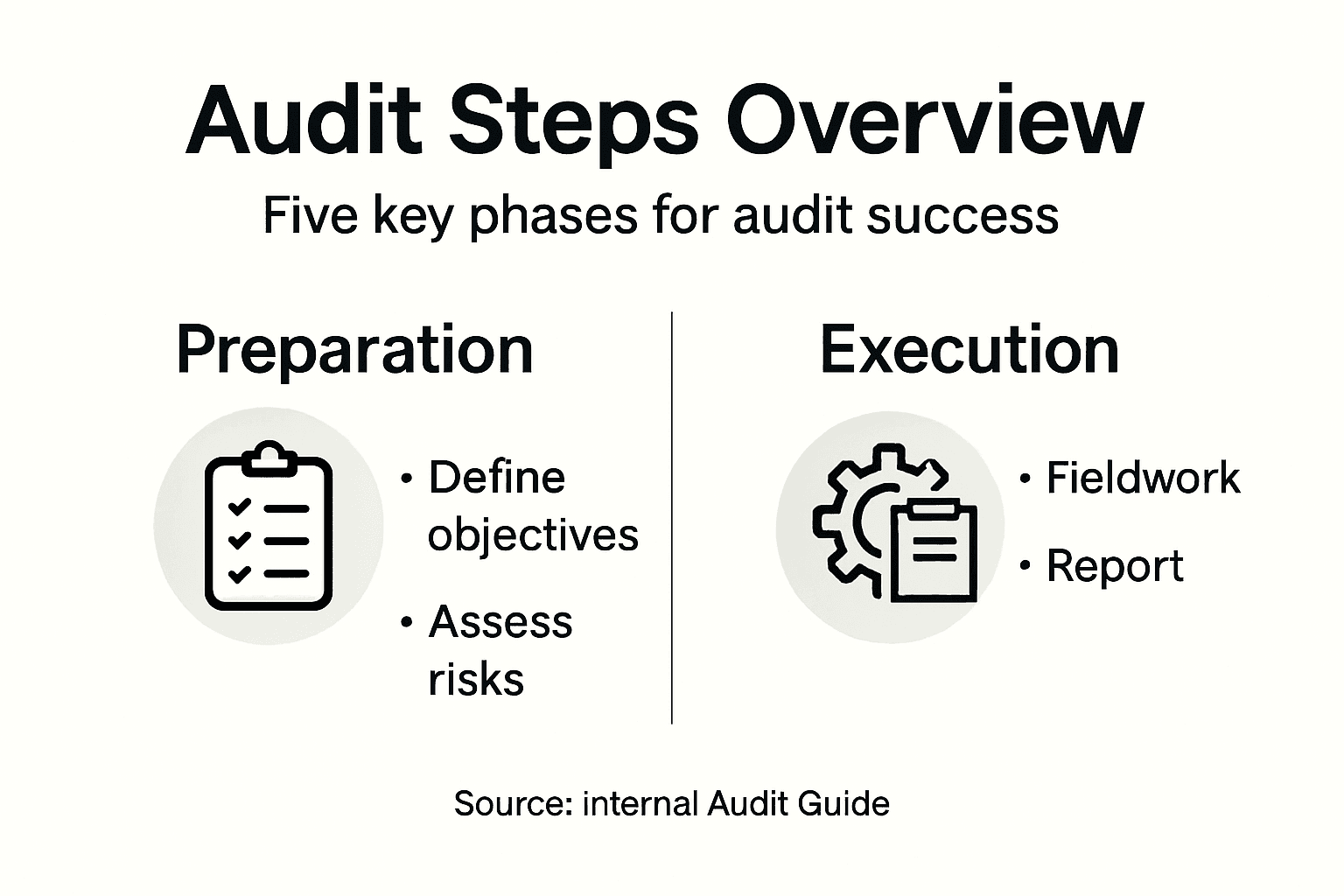
Document everything in your planning memo. This memo becomes your roadmap and your evidence that you’ve done proper planning. Include the business context, identified risks, audit objectives, planned scope, timing, and resource requirements. Share it with management for feedback before you launch fieldwork. This creates alignment and prevents surprises later.
When you’re assessing which risks to prioritize, consider frequency, impact, and the adequacy of existing controls. A risk that occurs daily with high financial impact deserves more audit attention than an annual process with minimal consequences. You’re making professional judgments about where audit effort creates the most value.
Your audit plan should focus on the highest-risk areas where failures would have the greatest impact on the organization, not on processes that happen to be easy to audit.
One practical reality: management sometimes pushes back on your risk assessment. They might want you to audit something low-risk because an executive is concerned about it, or they might downplay genuine risks. Document their input, acknowledge their perspectives in your memo, but maintain your professional independence. Your job is to provide objective assurance based on risk, not to audit what’s politically convenient.
Pro tip: Create a simple risk matrix during your planning conversations by plotting identified risks against likelihood and impact, then use it to justify which areas you’ll audit and how much time you’ll spend. This visual tool helps management understand your prioritization and provides clear documentation of your audit selection rationale.
Step 2: Develop audit plan and allocate resources
Now that you’ve defined your audit objectives and assessed risks, it’s time to create your actual audit plan and figure out who does what. This step transforms your strategy into executable work by confirming timelines, assembling the right team, and making sure you have sufficient resources to cover the identified risks thoroughly. A well-developed plan prevents chaos during fieldwork and keeps stakeholders aligned on expectations.
Start by confirming audit schedules with your clients and key stakeholders. You identified risks in the previous step, but now you need to coordinate the practical logistics of when audits will happen. Scheduling isn’t just about picking dates. You’re balancing competing priorities, considering business cycles, coordinating with other audit activities, and accounting for resource availability. A financial services audit might need to happen after month-end close when transaction data is final. An IT audit might need to occur during a slower period to avoid disrupting production systems. Have explicit conversations about timing and document agreements in writing.
Next comes team assignment. Your audit planning process should include designating teams that have the right skills and experience for each engagement. Not every team member can audit every function. Consider these factors when building your audit team:
Technical expertise required for the area being audited (banking operations, lending, compliance, technology)
Seniority level appropriate to the risk and complexity (senior auditors for high-risk areas, experienced staff for routine processes)
Specialized certifications such as CIA, CISA, or domain-specific credentials that add credibility
Team chemistry and whether members work well together under pressure
Development opportunities for junior staff to grow their skills
You’ll also need to determine whether you have internal capacity to handle all the audits you’ve planned or whether you need to bring in external resources. Some organizations use third-party auditors for specialized areas like IT security, regulatory compliance, or forensic investigation. Others contract out when internal staff are stretched too thin. Be realistic about capacity. It’s better to audit fewer areas thoroughly with your actual available resources than to plan ambitious work you’ll struggle to complete.
Allocate your audit days thoughtfully across the planned engagements. You have a fixed budget of hours and staff availability. Map out how you’ll distribute these resources against your audit plan. If deposit reconciliation is high-risk and complex, plan more days there than for a straightforward payroll control review. Document your resource allocation so you can explain your reasoning later.
Create a master audit schedule that shows what’s being audited, when, who’s leading it, and approximately how many hours you’ve allocated. Share this schedule with management and the audit committee. It manages expectations and demonstrates that you’ve thought through the logistics.
Your resource allocation should reflect risk, not convenience. Spend your audit hours where they’ll have the greatest impact on reducing organizational risk.
One practical note: plans change. You might discover during fieldwork that an area is more complex than expected, requiring additional time. A key audit team member might leave unexpectedly. System implementations might be delayed. Build some flexibility into your annual plan. Reserve a portion of your audit hours as contingency for emerging issues or high-priority requests from leadership. This flexibility keeps you credible when you need to respond to unexpected demands.
Pro tip: Document your resource allocation decisions in a resource capacity analysis that shows hours available per auditor, hours allocated to planned audits, and remaining capacity for unexpected work. Review this quarterly and adjust assignments as needed to prevent burnout and maintain audit quality.
Step 3: Conduct fieldwork and gather evidence
This is where your audit comes to life. Fieldwork is the actual execution of your planned tests and the collection of evidence that supports your conclusions. You’re moving from planning and strategy into the hands-on work of interviews, data analysis, transaction testing, and control verification. The quality of your fieldwork directly determines the quality of your audit report, so getting this step right is non-negotiable.
Begin by conducting process interviews with the people who actually perform the work you’re auditing. Talk to the loan officers who approve credit requests, the payment processors who handle daily transactions, the compliance staff who monitor regulatory requirements. Ask them how processes work, what challenges they face, where they think risks exist, and what controls they rely on. These conversations are invaluable. You’ll uncover informal workarounds, understand the human side of processes that policies don’t capture, and build rapport with the client organization. Document your interviews thoroughly. Record who you spoke with, when you met, and what you learned. This documentation becomes part of your audit evidence.
Next, execute the specific audit steps and tests identified during planning, such as verifying transactions, reviewing policies and procedures, analyzing datasets, and examining supporting documentation. Your evidence gathering should include multiple approaches to triangulate findings:
Transaction testing where you select samples of transactions and verify they were processed correctly and authorized appropriately
Data analysis using spreadsheets or audit software to identify patterns, outliers, or transactions meeting specific criteria
Documentation review examining policies, procedures, system configurations, and control testing performed by management
Observation of actual processes in operation to see if documented procedures match reality
Surveys or questionnaires to gather information from larger groups when interviews aren’t practical
As you conduct fieldwork, perform risk and control assessments to test control effectiveness and understand whether identified risks are being mitigated. Don’t just check boxes. Think critically about what you’re observing. If you’re testing loan approvals and find that five loan files lack proper credit analysis documentation, that’s not just a compliance issue. It indicates a control failure and suggests that credit risk might not be properly evaluated before loans are approved.

Maintain ongoing communication with your client throughout fieldwork. Don’t wait until you’re done to share observations. Have regular touchpoints with management to discuss test steps, preliminary findings, and areas where you need clarification. This transparency prevents surprises in your final report and gives management an opportunity to provide context or correct your understanding while you’re still in the field. It also demonstrates professionalism and respect for their time.
Ensure your evidence is sufficient and reliable. Sufficient means you’ve tested enough transactions or examined enough documentation to reach conclusions with appropriate confidence. Reliable means your evidence actually supports what you’re claiming. A memo from management saying “we have a control” isn’t as strong as actually observing the control operating or seeing evidence that it functioned. Be skeptical of evidence that comes only from the people being audited. Look for independent corroboration.
Your evidence should tell a clear story. A reader unfamiliar with the audit should be able to review your working papers and understand your conclusions without needing you to explain them.
Document everything in your working papers. These are your detailed records of what you did, what you found, and how you reached conclusions. Working papers should include audit programs showing what you tested, samples showing which transactions you examined, calculations, interview notes, and any evidence you gathered. Organize them logically so someone can follow your work. Years later, if management questions your findings or if regulators ask about your audit, your working papers are your proof that you did thorough, professional work.
One reality of fieldwork: clients are busy. They might not respond promptly to your information requests. System access might be delayed. People you need to interview might be traveling. Build in buffer time. Keep a list of outstanding items and follow up regularly. Be persistent but professional. The quality of your audit depends on the completeness of your evidence.
Pro tip: Create a working paper index at the start of fieldwork that outlines what evidence you’ll gather, where it will be documented, and who’s responsible for obtaining it. Review this regularly to ensure you’re on track and haven’t missed critical evidence. This prevents last-minute scrambling and ensures consistent documentation standards across your team.
Step 4: Evaluate findings and communicate results
You’ve completed fieldwork and gathered your evidence. Now comes the critical work of analyzing what you found, determining its significance, and communicating results to management and leadership. This step transforms raw observations into meaningful audit findings that drive organizational improvement. How you present findings directly affects whether management acts on them or dismisses them as theoretical concerns.
Start by evaluating your audit results against your original objectives. For each area you audited, ask yourself: Did controls operate as designed? Were risks effectively mitigated? What deviations from policy or expectation did we observe? Not every observation rises to the level of a significant finding. If you found one transaction processed with a missing signature out of 200 tested, that’s a minor control exception. If you found 40 transactions missing required approvals, that’s a systemic control failure. Distinguish between isolated incidents and patterns that indicate real control weaknesses.
When you’ve identified findings worth reporting, structure them clearly with sufficient detail that management understands the issue and its implications. Each finding should address these elements:
What happened (the observation or control deficiency you identified)
Why it matters (the risk or impact if the condition continues)
Why it happened (what you learned about the root cause)
What should change (your recommendation for corrective action)
Be specific. Instead of writing “controls need improvement,” write “loan approval files for 38 of 100 sampled loans lacked documented credit analysis, preventing verification that lending decisions were based on complete borrower financial information.” Specific findings are credible and actionable.
Communicate findings through multiple channels. First, conduct an exit conference with management to discuss observations and review responses while you’re still in the field. This meeting serves several purposes. It gives management an opportunity to provide context or correct your misunderstandings before findings are finalized. It signals respect for their perspective. And it gives them advance notice so the final report contains no surprises. Document who attended the exit conference and what was discussed.
Next, draft your audit report presenting findings, recommendations, and management’s responses. The report should be professional, clear, and focused on facts rather than opinion. Include an executive summary for busy readers who won’t review the full report. Present findings in order of significance or risk. Provide sufficient context that someone unfamiliar with the area understands the implications.
Request that management provide formal responses addressing your findings with corrective action plans, timelines, and responsible parties. Their responses should address root causes, not just symptoms. If you found that loan approvals lack credit analysis, management might respond that they’re implementing a loan review checklist and retraining staff. That addresses the root cause. If they respond that they’ll “pay closer attention,” that’s not a sufficient corrective action.
Finalize your report incorporating management’s responses. The audit committee and senior leadership will review it, so clarity matters. Avoid audit jargon that obscures meaning. Your goal is accountability and improvement, not impressive-sounding language. Share the final report with the audit committee and relevant leadership. Be prepared to present findings orally and answer questions about your methodology and conclusions.
Your findings should move management to action. If they can read your report and argue that your observations don’t really matter, you haven’t communicated the significance effectively.
One important note: management might disagree with your findings. They might argue that your sample was too small, that you misunderstood the process, or that the risk you identified is acceptable. Listen to their perspective. Sometimes they’re right and you need to adjust findings. Sometimes they’re defensive and you need to stand firm. Document disagreements in your report. Show that you considered their perspective and explain why you maintained your position. This demonstrates professional judgment rather than inflexibility.
After the report is issued, your work isn’t done. Track management’s progress on implementing corrective actions. Follow up on timelines they committed to. Verify that actions actually address the findings. Some organizations assign audit staff to monitor follow-up. Others bring findings back into subsequent audits to confirm resolution. Either way, accountability requires follow-through.
Pro tip: When drafting findings, have someone unfamiliar with the audit review them and ask “Could the person being audited argue that this isn’t really a problem?” If yes, strengthen your finding with more specific examples, quantified impact, or clearer risk explanation. Strong findings are hard to dismiss because they’re based on facts and address genuine organizational risk.
Step 5: Implement improvements and monitor progress
Here’s a summary of how each audit step contributes to overall audit effectiveness:
Audit Step | Primary Purpose | Key Outcome | Common Pitfall |
Define objectives and assess risks | Identify focus and priorities | Aligned audit scope | Overlooking emerging risks |
Develop plan and allocate resources | Organize people and timing | Efficient audit execution | Underestimating resource needs |
Conduct fieldwork and gather evidence | Collect and test information | Reliable audit findings | Insufficient or biased evidence |
Evaluate findings and communicate results | Analyze and share results | Actionable recommendations | Findings lack clarity or impact |
Implement improvements and monitor progress | Drive real changes | Sustained risk reduction | Incomplete follow-through |
Publishing your audit report isn’t the end of your work. It’s actually the beginning of the most important part. Audits only create value when management acts on recommendations and controls actually improve. This final step involves tracking corrective action plans, verifying implementation, and escalating issues when progress stalls. Without diligent follow-up, your audit findings become historical documents rather than catalysts for change.
Start by establishing a tracking system for all outstanding recommendations. Create a simple spreadsheet or use audit management software that captures each finding, the corresponding corrective action, the responsible manager, the target completion date, and current status. This becomes your accountability tool. You’ll reference it in every follow-up conversation with management. The existence of the tracking system signals that you take the recommendations seriously and expect the same from them.
Schedule regular follow-up meetings with management to review progress. Don’t wait until corrective actions are supposedly complete before checking in. Meet quarterly or more frequently depending on the significance of findings. Ask specific questions: What steps have been taken? What obstacles have you encountered? Do you still expect to meet the original timeline? If not, what’s the revised date? This ongoing dialogue keeps corrective actions visible and prevents them from slipping to the bottom of management’s priority list.
When management reports that corrective actions are complete, don’t simply accept their word. Verify implementation by testing whether improvements actually address the original findings. If the original finding was that loan files lacked credit analysis documentation, verify that new loans now have documented analysis. If the finding was that certain transactions bypassed approval workflows, verify that the system now enforces approvals. Your verification should be proportional to the risk. High-risk findings warrant thorough testing. Lower-risk issues might require less detailed verification.
Document your follow-up work. Record what you tested, what you found, and whether you believe the corrective action actually addressed the root cause. If implementation is complete and effective, formally close the finding. If it’s incomplete or ineffective, continue monitoring. Your documentation supports accountability and provides evidence of your diligent follow-up if regulators or leadership question whether audit recommendations are being implemented.
Create clear categories for tracking status:
The following table highlights effective follow-up strategies to ensure audit recommendations are implemented:
Strategy | Advantage | Challenge |
Periodic status tracking | Maintains accountability | May require diligence to update |
Independent verification of actions | Ensures true resolution | Can be time consuming |
Escalation to leadership | Drives urgency | Risk of stakeholder resistance |
Categorizing findings by status | Clarifies progress | Requires clear criteria |
On track for findings where management is progressing as planned
At risk for findings where implementation is behind schedule or facing obstacles
Overdue for findings where the target date has passed without completion
Implemented for findings where you’ve verified that corrective actions are complete and effective
Management exception for findings where management consciously decided to accept the risk rather than implement changes
When findings become overdue, escalate. Management exceptions are acceptable. Indefinite delays are not. Escalate overdue findings to senior leadership and the audit committee. Present data showing which findings remain unresolved and for how long. This escalation demonstrates that you’re monitoring the audit process seriously and expecting accountability from the entire organization.
Build a culture of accountability around audit recommendations. When management knows that findings will be tracked, tested, and reported to the audit committee, they’re more likely to prioritize corrective actions. When they know that you’ll verify implementation rather than accepting promises, they’ll ensure actions are actually completed. Your reputation as an auditor depends partly on your technical skills but equally on your follow-through.
Unresolved audit findings reflect poorly on the entire organization. Management accountability for implementation is as important as the audit process itself.
One reality: sometimes corrective actions don’t work. Management implements a new control only to discover it creates operational friction or doesn’t actually prevent the risk. When this happens, work collaboratively with management to refine the approach. Your role isn’t to be rigidly inflexible but to ensure that genuine improvements happen. Document revised approaches and continue monitoring until you’re confident that risks are actually mitigated.
Consider bringing unresolved or problematic findings into your next annual audit cycle. If a high-risk finding from three years ago remains only partially addressed, that’s worth auditing again. This reinforces the importance of implementation and prevents issues from becoming institutionalized.
Pro tip: Maintain a dashboard showing the status of all outstanding audit recommendations organized by finding date and responsible manager. Share this quarterly with senior leadership and the audit committee. Transparency about which corrective actions are progressing and which are stalled creates organizational pressure for completion and demonstrates your diligent monitoring.
Master Your Internal Audit Success with Expert Training
Navigating the complexities of internal audit requires clear objectives, precise risk assessments, and effective communication of findings. The step-by-step guide highlights critical challenges like prioritizing high-risk areas, allocating resources wisely, and ensuring management accountability for corrective actions. If you want to transform these insights into actionable skills and overcome common pitfalls such as inadequate evidence gathering or unclear reporting, professional education is essential.
Unlock your potential with tailored courses at Compliance Seminars designed specifically for audit and compliance professionals. Gain practical knowledge on risk-based audit planning, fieldwork techniques, control frameworks such as COSO and SOX, and strategies for effective follow-up that guarantee lasting improvements. Visit the landing page now to explore webinars, live events, and certification-approved training that can elevate your internal audit practice today.
Frequently Asked Questions
What are the critical objectives for an internal audit?
Defining clear objectives is essential for an internal audit. Start by engaging with management to identify the areas that need focus and what risks they face so that objectives align with organizational goals.
How do I assess risks effectively during the audit planning phase?
To assess risks effectively, engage with key stakeholders and ask about their concerns and potential vulnerabilities. Create a risk matrix to visualize and prioritize identified risks based on their frequency and impact.
What steps should I take to communicate audit findings to management?
Communicating findings should involve an exit conference to discuss observations and draft a clear report. Ensure the report outlines what happened, why it matters, and recommendations for corrective actions so management can take actionable steps.
How can I ensure that audit recommendations lead to real improvements?
To ensure recommendations lead to improvements, establish a tracking system for all outstanding findings. Schedule regular follow-up meetings to review progress and verify that actions address the root causes identified in the audit.
What should I include in my audit report for maximum clarity?
An effective audit report should include an executive summary, a clear structure of findings, and recommendations with management’s responses. Use specific examples to illustrate issues so that readers easily understand their significance and implications.
How can I handle disagreements with management regarding audit findings?
If disagreements arise, listen to management’s perspective and document their responses. Stand firm on findings supported by evidence, and ensure the report reflects both your observations and management’s views for transparency.
Recommended
Comments