Compliance Management: Why It Matters in Finance
- Леонид Ложкарев
- Jan 26
- 11 min read
Updated: Jan 31

Managing compliance in today’s American financial services sector involves more than policy manuals or routine trainings. With increasing regulatory scrutiny and the threat of legal actions or penalties for noncompliance, compliance officers and internal auditors must create systems that support organizational accountability and protect stakeholder interests.
By focusing on board and management oversight, a robust compliance program, and compliance audit, you lay the groundwork for proactive risk management and regulatory confidence.
Table of Contents
Key Takeaways
Point | Details |
Importance of Compliance Management | Compliance management goes beyond mere checklists; it involves creating systems that align with regulations and protect stakeholders. |
Three Pillars of Compliance | Board oversight, a robust compliance program, and regular audits are essential for effective compliance management. |
Risks of Non-Compliance | Failing to comply can result in significant financial penalties and irreversible reputational damage. |
Best Practices | Establish written policies, targeted training, and consistent enforcement to enhance the compliance culture within your organization. |
Compliance Management Basics and Core Concepts
Compliance management is not about checking boxes. It’s about building systems that keep your organization aligned with regulatory requirements while protecting stakeholders and the institution itself. For financial services professionals, understanding the mechanics of compliance management separates effective risk mitigation from reactive firefighting.
What is Compliance Management?
At its core, compliance management is the process financial institutions use to learn about regulatory obligations, ensure staff understand them, weave requirements into daily operations, and verify that activities meet compliance goals. Organizations manage multiple risks through this system: regulatory changes, new product launches, employee knowledge gaps, and the ever-present threat of non-compliance that can trigger legal actions or substantial penalties.
Think of compliance management as infrastructure. Just as physical infrastructure supports operations, a compliance management system supports regulatory adherence across your entire organization.
The Three Pillars of Compliance Management
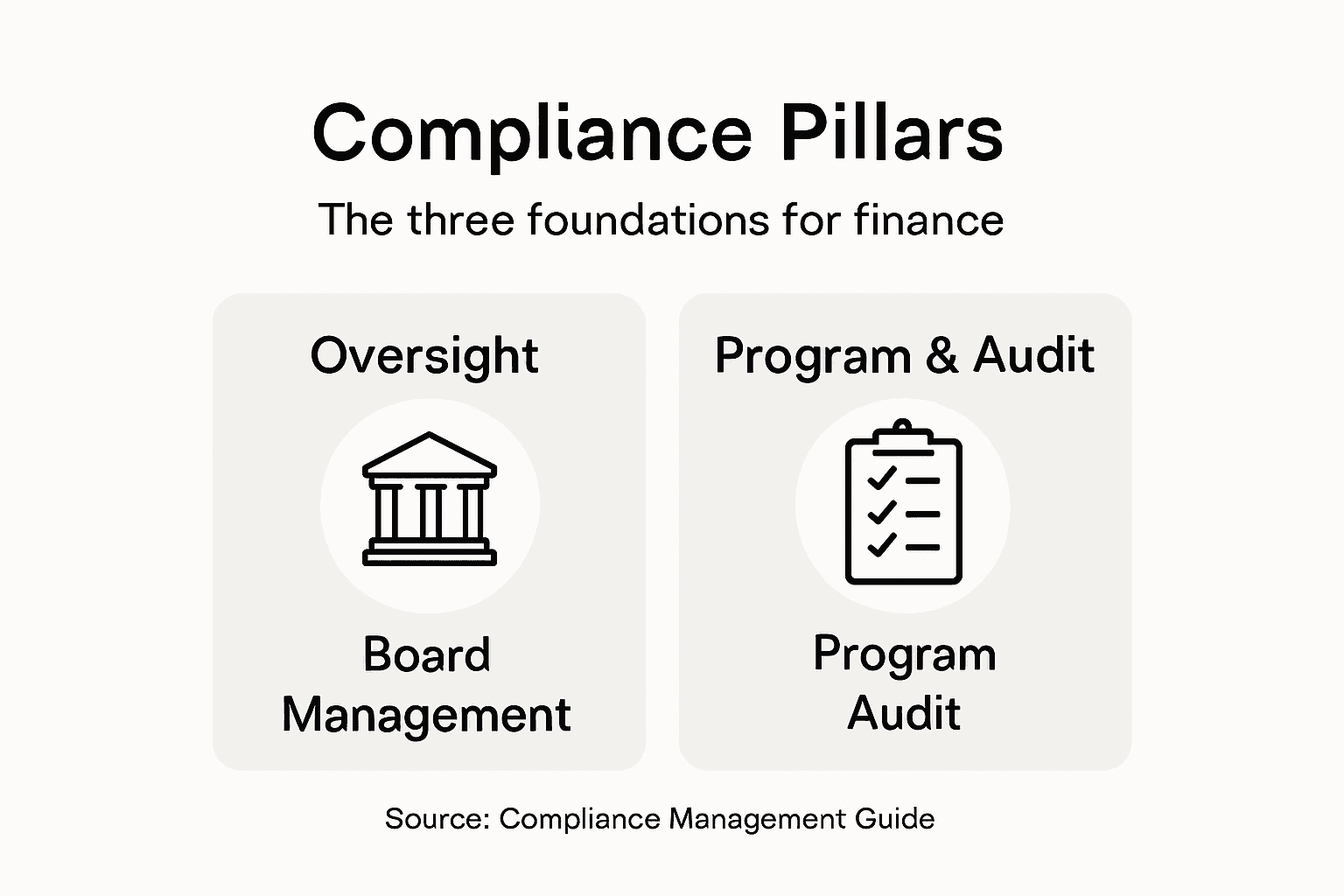
Financial institutions typically structure compliance around three interconnected elements. The first is board and management oversight, where leadership sets the tone and allocates resources. Your board holds ultimate responsibility for the system’s effectiveness. They must adopt clear policies, designate a compliance officer with real authority, and conduct periodic audits.
The second pillar is the compliance program itself. This includes training, emerging issue assessment, consumer complaint management, and corrective action follow-up. A compliance officer typically administers this work, often supported by a compliance committee.
The third element is compliance audit, which provides independent verification that the system actually works. Internal control systems that include proper audit functions enable agencies and institutions to verify whether compliance objectives are genuinely being met or merely documented as met.
Why This Matters to Your Role
As a compliance officer or internal auditor, your effectiveness depends on recognizing that compliance management isn’t a department function. It requires board engagement, management integration across business lines, and honest assessment of what’s working versus what looks good on paper.
Regulators examine whether your institution has genuinely incorporated compliance into operations or whether compliance exists as a separate silo. The difference shows up in audit findings, penalty assessments, and ultimately in institutional reputation.
Pro tip: Map your organization’s three compliance pillars onto your current structure this month. Identify gaps in board oversight, program execution, or audit scope, then prioritize eliminating them before regulators discover them first.
Main Types of Compliance Management Systems
Compliance Management Systems are not one-size-fits-all. Financial institutions structure their compliance functions differently based on size, regulatory environment, and organizational complexity. What matters is understanding the core components that every effective system must contain, then adapting them to your institution’s reality.
The Core Components
Every CMS rests on four foundational elements. The first is board and management oversight, where senior leaders define compliance culture, allocate resources, and demonstrate commitment to regulatory adherence. Without visible board engagement, compliance becomes a paper exercise.
The second element is the compliance program, which translates regulatory requirements into actionable policies, procedures, and training. This is where compliance meets daily operations. A strong compliance program includes clear policies guiding staff behavior, mandatory training ensuring everyone understands obligations, and established processes for handling customer complaints.
The third component is the compliance audit function. This provides independent evaluation of whether your compliance efforts actually work or just look good on paper. Regular audits identify gaps, assess control effectiveness, and report findings to leadership.
The fourth element involves verification of compliance with consumer protection laws. This means demonstrating to regulators that your institution genuinely complies with specific consumer protection requirements, not just maintaining general compliance awareness.
How These Components Work Together
Think of these four elements as interconnected rather than separate. Board oversight guides resource allocation and cultural priorities. The compliance program executes the strategy through policies and training. The audit function independently verifies execution. Consumer protection verification ensures specific regulatory obligations are demonstrably met.
Your compliance structure might centralize all functions under one officer or distribute responsibilities across departments. Either way, these four components must work together seamlessly. Gaps in any area create compliance vulnerabilities that regulators will identify.
Why Structure Matters
Institutions with fragmented compliance often discover problems only when examiners arrive. Those with integrated systems catch issues internally, fix them quickly, and demonstrate proactive risk management to regulators. The difference shows up in examination findings and penalty assessments.
This table highlights business impacts of key compliance management components:
Component | Purpose | Impact on Business |
Board Oversight | Guides compliance culture | Promotes accountability, reduces risk |
Compliance Program | Implements policies and training | Improves staff awareness, lowers violations |
Audit Function | Independently tests effectiveness | Uncovers weaknesses, validates controls |
Consumer Law Verification | Ensures regulatory adherence | Minimizes fines, boosts reputation |
Pro tip: Document how your institution currently addresses each of these four components, then identify which areas need stronger integration or additional resources before your next regulatory examination.
Key Components and How They Function
Effective compliance management requires three core components working in tandem. None of them operates in isolation. Each supports the others, creating a system that catches problems before regulators do.
Board and Management Oversight
Your board holds ultimate responsibility for compliance effectiveness. This means more than attending meetings. Board members must actively commit resources, adopt clear compliance policies, and demonstrate visible support for your compliance function.

Management assigns specific roles and responsibilities so everyone knows who does what. Without this clarity, accountability disappears. Someone owns compliance culture. Someone owns policy adherence. Someone owns audit follow-up. When responsibilities blur, nothing gets done.
The Compliance Program
This is where strategy becomes reality. Written policies and procedures establish how your institution meets regulatory obligations. Without documented procedures, compliance relies on individual memory and interpretation.
Mandatory employee training ensures staff understand their compliance obligations. Training cannot be a once-yearly checkbox. It must be targeted, current, and tied to specific job functions. A loan officer needs different training than a deposit operations specialist.
Complaint resolution processes demonstrate your institution takes customer concerns seriously. These processes also surface compliance issues before they become regulatory problems.
Compliance Audit Function
Audit provides the independent perspective your internal compliance team cannot offer. Auditors test whether policies actually guide behavior. They verify whether training is sticking. They assess whether complaint processes work or just exist on paper.
The audit function reports findings directly to senior management and the board. This independence matters because compliance professionals sometimes face pressure to minimize findings. Auditors answer to leadership, not to the compliance officer.
Independent Verification
Continuous monitoring and deficiency correction minimize risk exposure. This happens through ongoing reviews, testing, and process improvements. Verification isn’t a once-a-year audit event. It’s embedded into operations.
How They Work Together
Board oversight sets tone and allocates resources. The compliance program executes daily. Audit tests execution. Verification catches drifts before they become problems. Remove any component and the system breaks.
Pro tip: Establish a quarterly compliance metrics dashboard that shows board and management oversight, program execution results, audit findings, and verification activities in one place so leadership can see the whole system functioning together.
Essential U.S. Laws and Regulatory Frameworks
Your compliance obligations don’t exist in a vacuum. They stem from specific laws and regulations that Congress, federal agencies, and courts have established. As a compliance officer or internal auditor, you need to understand which laws apply to your institution and what they actually require.
Consumer Protection Laws
The Equal Credit Opportunity Act (ECOA) prohibits discrimination in lending based on protected characteristics like race, color, religion, national origin, sex, marital status, or age. Violations aren’t always obvious. They surface through statistical analysis of lending patterns or in how loan officers document credit decisions.
The Truth in Lending Act (TILA) requires clear disclosure of credit terms, costs, and borrower rights. This law touches everything from mortgages to credit cards. TILA violations often stem from formatting errors or missing disclosures rather than intentional deception, but regulators don’t distinguish between the two.
Anti-Money Laundering and Financial Crime Prevention
The Bank Secrecy Act (BSA) requires institutions to report suspicious activity and maintain customer identification records. This is not optional. Your institution must have systems to detect, investigate, and report transactions that might involve money laundering or terrorist financing.
Anti-Money Laundering (AML) regulations implement BSA requirements. They require customer due diligence, beneficial ownership identification, and ongoing transaction monitoring. These aren’t academic exercises. Financial Crimes Enforcement Network (FinCEN) expects your institution to know its customers and flag suspicious patterns.
Corruption and Foreign Compliance
The Foreign Corrupt Practices Act (FCPA) prohibits paying foreign officials to obtain business advantages. If your institution operates internationally or works with foreign entities, FCPA compliance is critical. Violations carry criminal penalties, not just civil fines.
The Enforcement Reality
Multiple federal agencies enforce these laws including the Department of Justice, Securities and Exchange Commission, and FinCEN. Noncompliance results in substantial fines, criminal charges, and reputational damage that can destroy institutional credibility.
Regulators examine whether your compliance management system actually addresses these obligations or just mentions them in policy documents.
Here’s a summary of four major U.S. compliance laws and their core requirements:
Law/Regulation | Main Requirement | Typical Institutional Action | Enforcement Outcome |
ECOA | Prevents discriminatory lending | Statistical review, staff training | Regulatory exam, fines |
TILA | Requires clear credit disclosures | Standardized forms, audit reviews | Fines, public orders |
BSA/AML | Detect and report financial crimes | Identity checks, transaction monitoring | Civil and criminal penalties |
FCPA | Prohibits bribery abroad | Overseas audit, third-party vetting | Criminal charges, asset seizures |
Pro tip: Conduct an audit this quarter mapping each major federal law that applies to your institution against your specific compliance policies and training programs, then identify gaps before examiners do.
Primary Risks and Penalties for Non-Compliance
Non-compliance is not a cost your institution can absorb. The financial penalties are substantial. The reputational damage is permanent. The operational restrictions can hobble your ability to serve customers. Understanding what’s at stake should drive your compliance strategy.
Financial Penalties and Enforcement
From 2009 to 2015, U.S. federal agencies assessed approximately $12 billion in fines and penalties for violations of the Bank Secrecy Act, Foreign Corrupt Practices Act, and sanctions requirements. That’s not ancient history. Enforcement continues today at similar or higher rates.
Penalties take multiple forms. Civil monetary penalties hit directly. Asset forfeitures remove funds from your institution. Criminal charges can result in jail time for executives. And yes, individual employees go to prison for compliance failures. This is not theoretical.
Sanctions Violations
The Office of Foreign Assets Control enforces U.S. economic and trade sanctions. Civil monetary penalties can reach millions of dollars for individual violations. A single transaction with a sanctioned entity can trigger massive fines.
OFAC doesn’t always prosecute aggressively. They reward institutions that implement corrective action plans and make voluntary disclosures. But institutions that hide violations or show negligence face maximum penalties.
Reputational Damage
Financial penalties hurt. Reputational damage kills institutions. When regulators impose consent orders or public enforcement actions, customers flee. Employees question leadership. Business partners reconsider relationships. The damage extends far beyond the dollar amount of the fine.
Operational Restrictions
Regulators can restrict what your institution does. Enhanced compliance monitoring. Limited product offerings. Required third-party oversight. These restrictions suffocate growth and profitability. Some institutions never recover operationally even after penalties are paid.
Why This Matters Now
Banking compliance failures reveal patterns that regulators use to identify vulnerable institutions. Your compliance weaknesses today become examination findings tomorrow. The sooner you address gaps, the sooner you reduce exposure.
Compliance is not an insurance policy. It’s a requirement. Failure to invest in compliance management guarantees future problems.
Pro tip: Calculate what penalties would cost your institution for a single major compliance violation, then use that number to justify compliance budget requests and resource allocation to skeptical stakeholders.
Best Practices for Enhancing Compliance Programs
Building a strong compliance program requires more than checking boxes. You need a structured approach that addresses real risks, engages your organization, and actually changes behavior. The best programs share common elements that work together to create a culture where compliance matters.
Foundation: Written Policies and Clear Governance
Start with written policies and procedures that translate regulatory requirements into actionable guidance. Generic policies fool no one. Your policies must address your specific business, your specific products, and your specific risks.
Appoint a designated compliance officer with real authority and direct board access. This person cannot report through legal, cannot report through operations, and cannot face pressure to downplay findings. They need independence and resources.
Establish a compliance committee that meets regularly and includes senior leadership. This committee owns compliance strategy, reviews audit findings, and tracks corrective action progress.
Training and Communication
Training must be mandatory, targeted, and role-specific. A loan officer needs different training than a compliance analyst. Training must happen during onboarding and repeat annually at minimum.
Create anonymous reporting channels so employees can raise concerns without fear of retaliation. Many compliance issues surface through employee tips, not audits. Make reporting easy and protect reporters.
Monitoring and Enforcement
Conduct systematic internal auditing and monitoring of compliance activities. This means transaction testing, policy compliance reviews, and periodic risk assessments. Data analytics tools help identify patterns that manual review misses.
Enforce standards consistently through clear disciplinary guidelines. When violations occur, discipline must be proportionate and applied equally regardless of employee seniority. Inconsistent enforcement destroys compliance culture.
Continuous Improvement
Respond to detected compliance issues quickly with corrective actions that address root causes, not symptoms. Require management to document what went wrong and how they fixed it.
Stay current on emerging risks. The Department of Justice now emphasizes managing emerging technology risks including artificial intelligence. Your program must evolve as your business and regulatory environment evolve.
Pro tip: Audit your current compliance program against these seven elements this quarter, score each one honestly, and create a remediation plan for any gaps before your next regulatory examination.
Strengthen Your Compliance Management with Proven Professional Training
Navigating the complex demands of compliance management in finance requires more than just policies on paper. As the article emphasizes, aligning board oversight, compliance programs, audits, and consumer protection verification is crucial to avoid costly penalties and reputational damage. If you are a compliance officer or internal auditor striving to close gaps and build a truly integrated system, targeted education is your best tool.
Unlock practical skills and insights with expert-led courses at Compliance Seminars. Our NASBA-approved webinars and in-person training cover essential topics including internal controls, audit frameworks, and regulatory compliance best practices tailored for financial services professionals. Act now to stay ahead of regulatory expectations and transform compliance risk into a competitive advantage. Visit Compliance Seminars today and begin fortifying your compliance program with confidence.
Frequently Asked Questions
What is compliance management in finance?
Compliance management in finance is the process by which financial institutions ensure adherence to regulatory obligations, educate staff about these requirements, integrate compliance into daily operations, and verify that activities meet compliance goals.
Why is compliance management important for financial institutions?
Compliance management is critical as it helps prevent legal penalties, protects the institution’s reputation, and ensures that the organization operates within the regulatory framework. Effective compliance can mitigate risks and help build trust with stakeholders.
What are the three pillars of compliance management?
The three pillars of compliance management typically include board and management oversight, the compliance program itself, and the compliance audit function. Each pillar is crucial for ensuring an effective compliance management system.
How do compliance audits benefit financial institutions?
Compliance audits provide independent verification of whether compliance efforts are genuinely effective. They help identify weaknesses in the compliance program, assess the effectiveness of controls, and ensure that regulatory obligations are being met consistently.
Recommended