Why Attend Compliance Seminars: Advancing Risk Management
- Леонид Ложкарев
- Feb 18
- 7 min read


Keeping up with complex regulations can feel relentless for American chief audit executives and compliance officers. As evolving laws and internal policies shape the banking sector, the need for structured, practical learning grows stronger. Compliance seminars provide not just theory but actionable strategies, equipping professionals with the skills needed to manage risk, uphold ethical standards, and earn critical CPE credits while strengthening their regulatory confidence.
Table of Contents
Key Takeaways
Point | Details |
Understanding Compliance Seminars | Compliance seminars are essential for navigating regulatory requirements effectively, combining legal standards with practical applications to ensure organizational integrity. |
Diverse Seminar Formats | Professionals should evaluate seminar formats—virtual webinars, in-person conferences, and corporate workshops—to align with their learning preferences and development goals. |
Continued Professional Education Importance | Engaging in Continuing Professional Education is crucial for maintaining regulatory compliance and enhancing professional competence across various industries. |
Practical Skills for Real-World Challenges | Developing practical skills through immersive training helps compliance professionals implement regulatory knowledge effectively and manage risks proactively. |
Defining Compliance Seminars and Core Concepts
Compliance seminars represent structured professional learning experiences designed to help organizations understand and manage regulatory requirements effectively. These educational programs provide comprehensive training on adhering to legal standards, internal policies, and ethical guidelines across various business domains.
At their core, compliance seminars focus on teaching professionals how to navigate complex regulatory landscapes. Compliance management strategies encompass a wide range of critical areas including:
Anti-corruption protocols
Antitrust regulations
Data protection frameworks
Environmental compliance standards
Workplace safety requirements
Financial reporting guidelines
These seminars are not just theoretical exercises but practical training sessions that equip professionals with actionable insights. By combining legal knowledge, organizational best practices, and risk management techniques, compliance seminars help professionals develop robust strategies for maintaining regulatory integrity.
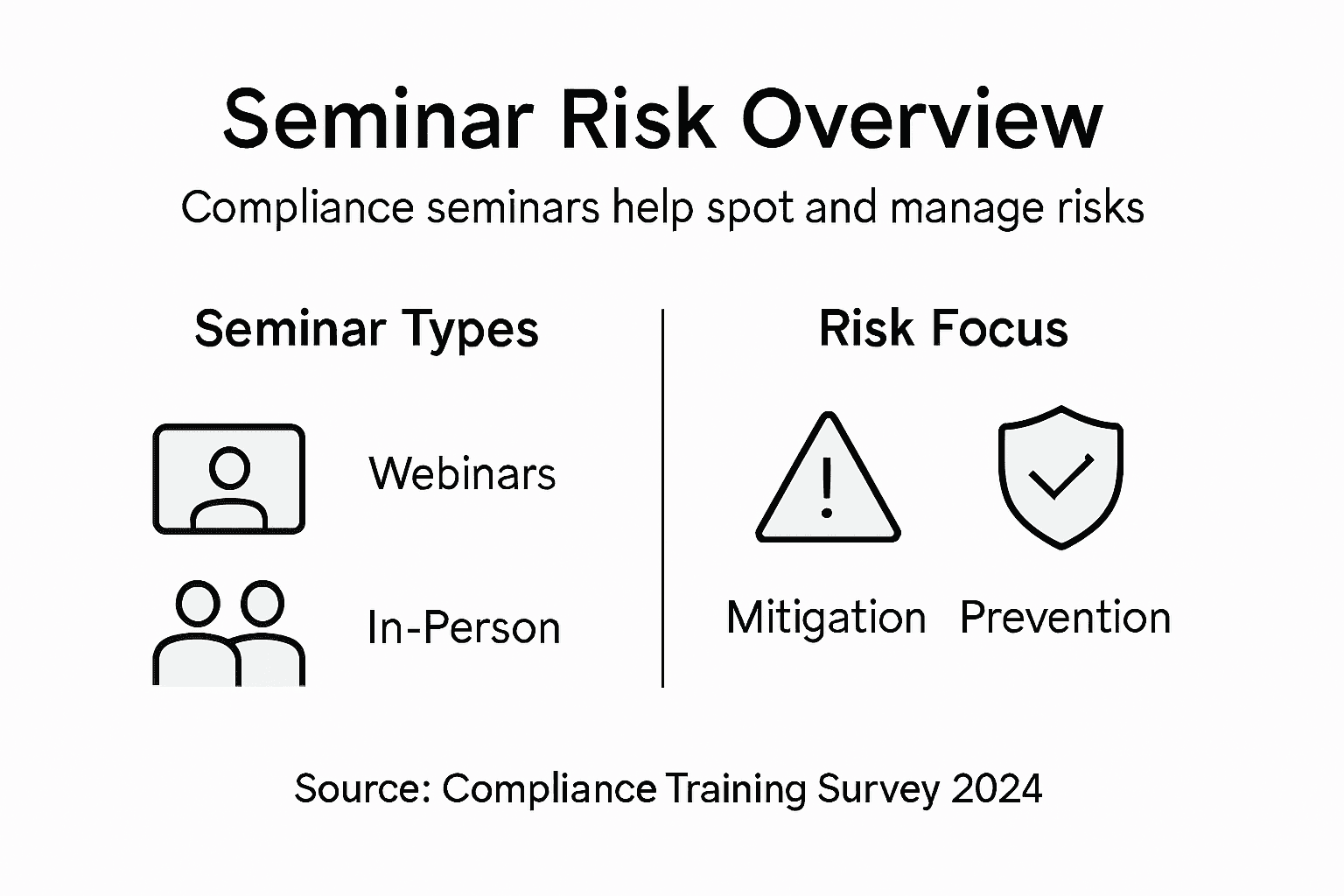
Risk mitigation emerges as a central objective of these educational programs. Participants learn to identify potential compliance vulnerabilities, implement preventative controls, and create systematic approaches to managing organizational risk. Through interactive workshops, case studies, and expert-led discussions, compliance seminars transform complex regulatory concepts into executable strategies.
Pro tip: Always approach compliance seminars with a strategic mindset, focusing on practical implementation rather than passive learning.
Seminar Formats: Webinars, In-Person, and Corporate
Compliance seminars offer diverse learning formats to accommodate different professional needs, preferences, and organizational requirements. Compliance training events range from interactive virtual platforms to immersive in-person experiences, each designed to deliver critical regulatory knowledge effectively.
Three primary seminar formats dominate the professional development landscape:
Virtual Webinars
Real-time online learning
Accessible from any location
Typically 60-90 minute sessions
Interactive Q&A opportunities
In-Person Conferences
Face-to-face networking
Comprehensive multi-day programs
Hands-on workshops
Direct expert interaction
Corporate Workshops
Customized organizational training
Tailored to specific industry requirements
On-site or dedicated training environments
Focused on company-specific compliance challenges
Each format offers unique advantages for professionals seeking to enhance their regulatory knowledge and risk management skills. Virtual webinars provide flexibility and convenience, allowing participants to learn from their home or office. In-person conferences create opportunities for deeper networking and more intensive learning experiences, while corporate workshops deliver targeted training addressing specific organizational needs.
Professionals can strategically select seminar formats based on their learning objectives, time constraints, and professional development goals. The key is to choose a format that maximizes knowledge retention and practical application of compliance principles.
Here’s a comparison of compliance seminar formats to help choose the best option for your needs:
Format | Best For | Learning Experience | Networking Potential |
Virtual Webinar | Busy professionals | Interactive, convenient | Limited, online connection |
In-Person Conference | Deep learning and networking | Immersive, hands-on | Extensive, face-to-face |
Corporate Workshop | Organization-specific needs | Customized, focused | Internal, team collaboration |
Pro tip: Select compliance seminar formats that align with your specific learning style and professional development requirements.
Regulatory Standards and Continuing Education Requirements
Continuing Professional Education (CPE) represents a critical mechanism for maintaining professional competence and regulatory compliance across various industries. Continuing education requirements vary globally but consistently aim to ensure professionals remain current with evolving regulatory landscapes and industry best practices.
Key aspects of regulatory standards for continuing education include:
Mandatory Credit Requirements
Annual minimum training hours
Specific subject area coverage
Accredited program participation
Documentation and reporting obligations
Professional Certification Maintenance
Ongoing skill verification
Knowledge currency assessment
Performance standard validation
Periodic recertification processes
Regulatory bodies like FINRA mandate structured continuing education programs designed to keep professionals updated on critical compliance, ethical, and regulatory developments. These programs typically encompass two primary components: the Regulatory Element and the Firm Element, which together provide comprehensive professional development and risk management training.
Continuing education is not just a compliance requirement, but a strategic investment in professional excellence and organizational risk mitigation.
Professionals must proactively engage with continuing education programs, understanding that these requirements represent more than bureaucratic checkboxes. They are fundamental mechanisms for maintaining professional standards, enhancing organizational resilience, and demonstrating commitment to ethical and regulatory excellence.
Pro tip: Track your CPE credits systematically and plan your professional development strategy at least one year in advance.
Building Practical Skills for Real-World Compliance Challenges
Effective compliance professionals require more than theoretical knowledge. Practical skills development demands immersive training that transforms abstract regulations into actionable strategies, enabling professionals to confidently navigate complex regulatory environments.
Key practical skill development strategies include:
Scenario-Based Learning
Complex regulatory simulations
Risk assessment exercises
Decision-making challenges
Ethical dilemma workshops
Technical Competency Building
Regulatory interpretation skills
Compliance documentation techniques
Risk identification methods
Investigative analysis training
Practical compliance training bridges the critical gap between theoretical knowledge and real-world application, transforming professionals from passive learners to proactive risk managers.
A competency-based learning framework goes beyond traditional training models by integrating continuous assessment, personalized skill development, and targeted interventions. This approach ensures professionals not only understand regulatory requirements but can effectively implement them across diverse organizational contexts.
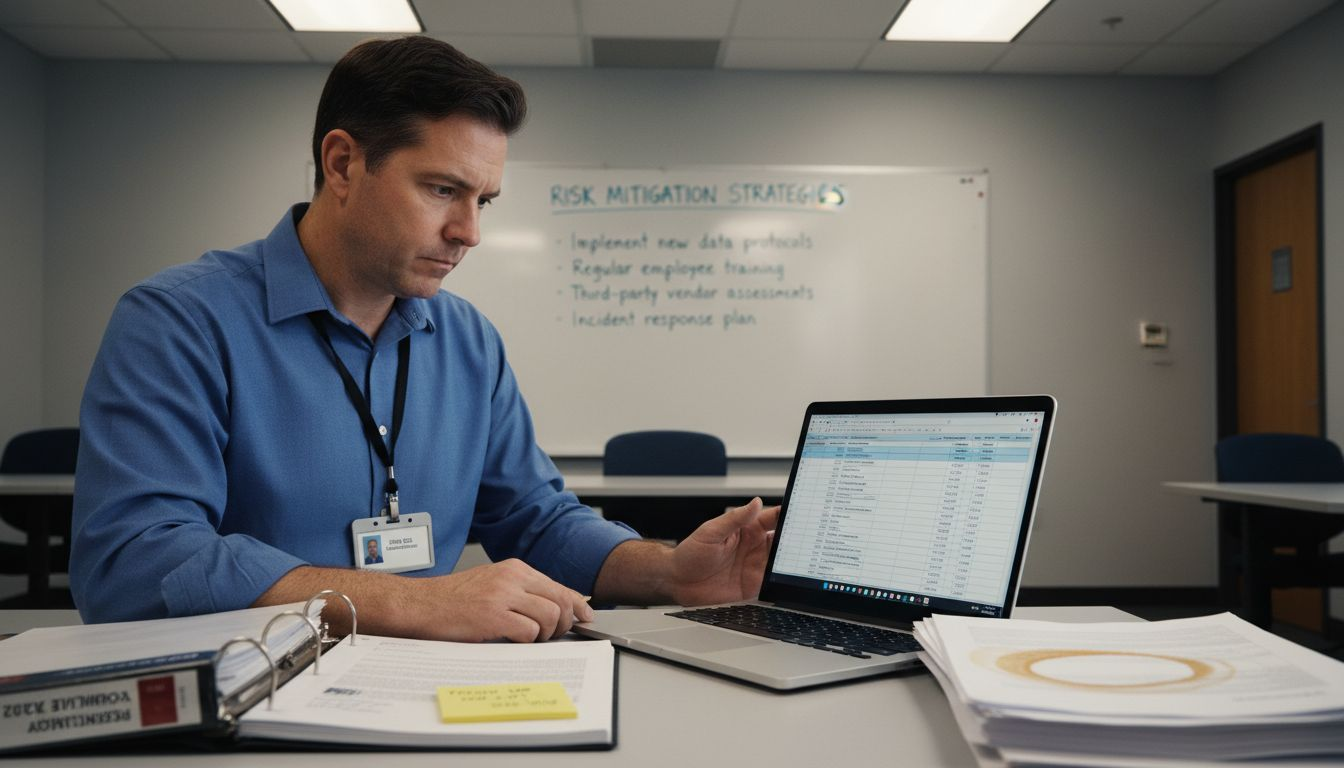
Successful compliance skill development requires a holistic approach that combines technical knowledge, critical thinking, and adaptable problem-solving techniques. Professionals must cultivate the ability to interpret complex regulations, anticipate potential risks, and develop strategic mitigation strategies that protect organizational interests.
Below is a summary of practical skills essential for real-world compliance success:
Skill Area | Core Benefit | Example Application |
Scenario-Based Learning | Improved risk response | Handling a data breach |
Technical Competency | Correct regulatory interpretation | Drafting accurate compliance reports |
Critical Thinking | Effective decision-making | Assessing new regulations |
Problem-Solving | Proactive risk mitigation | Designing new controls |
Pro tip: Complement formal training with real-world case studies and active professional networking to accelerate your practical compliance skills.
Mitigating Risks and Strengthening Leadership Accountability
Leadership accountability emerges as a critical mechanism for organizational risk management and compliance effectiveness. Leadership accountability strategies represent a systematic approach to transforming organizational culture through transparent and responsible governance.
Key components of effective leadership accountability include:
Ethical Decision-Making
Clear policy communication
Consistent standards enforcement
Transparency in organizational processes
Personal responsibility modeling
Risk Management Practices
Proactive compliance monitoring
Regular performance assessments
Comprehensive documentation
Strategic risk identification
Genuine leadership accountability transcends compliance checklists, creating an organizational ecosystem where ethical behavior becomes the fundamental operating principle.
Successful risk mitigation requires leaders to move beyond traditional compliance frameworks. They must actively cultivate an environment where accountability is embedded in organizational culture, encouraging employees to recognize and address potential risks before they escalate.
By establishing robust accountability mechanisms, organizations can significantly reduce potential legal, financial, and reputational risks. This approach demands continuous learning, adaptive strategies, and a commitment to maintaining high ethical standards across all organizational levels.
Pro tip: Develop a personal accountability scorecard that tracks your leadership’s compliance and risk management performance quarterly.
Avoiding Common Pitfalls in Compliance Training
Compliance training requires strategic design to overcome common educational challenges. Compliance training strategies must address systemic weaknesses that transform learning from a mundane checkbox exercise to an engaging professional development opportunity.
Common pitfalls in compliance training include:
Content Design Failures
Repetitive, dry presentation
Lack of real-world context
Generic, non-personalized scenarios
Minimal interactive elements
Delivery Method Limitations
Single training format reliance
Outdated instructional materials
Insufficient multimedia integration
Limited expert perspective
Effective compliance training transcends mere information transmission, creating transformative learning experiences that inspire behavioral change and proactive risk management.
Successful programs recognize that engagement drives learning retention. By incorporating diverse instructional techniques such as storytelling, interactive simulations, and multimedia content, organizations can dramatically improve knowledge absorption and practical application of compliance principles.
Professionals must demand training experiences that respect their intelligence and professional context. This means rejecting one-size-fits-all approaches in favor of tailored, dynamic learning environments that connect regulatory requirements to tangible workplace scenarios.
Pro tip: Request sample training materials before committing to any compliance program to assess its practical relevance and engagement potential.
Strengthen Your Risk Management with Expert-Led Compliance Seminars
The challenges of navigating complex regulatory landscapes and building practical skills for real-world compliance demand more than basic training. This article highlights key pain points such as risk mitigation, continuing education, and leadership accountability. If you want to move beyond theoretical knowledge to actionable strategies, it is critical to choose training that is practical, engaging, and tailored to your professional needs. The risk of common pitfalls like dry content and generic formats can leave you unprepared for dynamic compliance challenges.
Take control of your professional development by exploring comprehensive compliance seminars designed specifically for audit, risk, and compliance professionals. With NASBA-recognized Continuing Professional Education courses and webinars led by industry experts, you will gain hands-on skills in internal controls, cybersecurity, financial regulation, and more. Don’t settle for passive learning when you can join live webinars or attend in-person seminars across multiple U.S. cities that emphasize practical implementation. Visit https://compliance-seminars.com today and advance your capability to manage risk confidently and uphold leadership accountability.
Frequently Asked Questions
What are compliance seminars?
Compliance seminars are structured learning experiences designed to help organizations understand and manage regulatory requirements. They provide training on adhering to legal standards, internal policies, and ethical guidelines across various business domains.
What formats are available for compliance seminars?
Compliance seminars typically come in three formats: virtual webinars for convenient online learning, in-person conferences for deep networking and immersive experiences, and corporate workshops tailored to specific organizational needs.
How can compliance seminars enhance risk management skills?
Compliance seminars equip professionals with practical skills necessary for identifying compliance vulnerabilities, implementing preventative controls, and developing systematic risk management strategies through interactive workshops and real-world simulations.
Why is continuing education important for compliance professionals?
Continuing education is crucial for maintaining professional competence, as it ensures that compliance professionals remain updated on evolving regulations and best practices. This ongoing training is often mandated by regulatory bodies to uphold ethical and legal standards.
Recommended
Comments