What is fraud examination: a guide for audit pros

Updated: Mar 31

Most auditors believe their job is to catch fraud, but that’s a myth. Your primary role is to assess financial statements and internal controls, not to serve as a fraud detective. Yet fraud examination knowledge is essential for every audit and compliance professional. Understanding how fraud examiners operate, the techniques they use, and how to integrate fraud risk into your work transforms your effectiveness. This guide clarifies what fraud examination truly involves, dispels common misconceptions, and shows you how to apply specialized detection methods within your audits and compliance programs.
Table of Contents
Key Takeaways
Point | Details |
CFE certification scope | The Certified Fraud Examiner credential covers Fraud Prevention and Deterrence, Financial Transactions and Fraud Schemes, Investigation, and Law, equipping professionals to detect, investigate, and prevent occupational fraud. |
Beyond routine audits | Fraud examiners specialize in uncovering, investigating, and preventing fraudulent activities beyond standard audit procedures. |
Integrate fraud risk into audits | Incorporating fraud risk considerations into planning and fieldwork strengthens detection and early issue identification. |
Behavioral red flags | Soft indicators such as management pressure and unusual vendor relationships often precede concrete evidence. |
Brainstorming for detection | Brainstorming sessions with the audit team sharpen fraud detection capabilities before each engagement. |
Understanding fraud examination: scope and certification
Fraud examination goes far beyond routine audit procedures. While auditors assess financial statement accuracy and control effectiveness, fraud examiners specialize in uncovering, investigating, and preventing fraudulent activities. The Certified Fraud Examiner certification covers four distinct areas: Fraud Prevention and Deterrence, Financial Transactions and Fraud Schemes, Investigation, and Law. This comprehensive scope prepares professionals to handle complex cases requiring forensic skills.
The CFE credential validates expertise in detecting occupational fraud, asset misappropriation, corruption, and financial statement fraud. Unlike internal auditors who focus on risk assessment and control testing, CFEs conduct full forensic investigations. They gather evidence that holds up in legal proceedings, interview suspects, and work closely with law enforcement. This distinction matters because mixing roles creates confusion about responsibilities and expectations.
Key fraud examination skill sets include:
Forensic accounting techniques for tracing financial transactions
Interview and interrogation methods for obtaining confessions
Legal knowledge covering evidence rules and courtroom testimony
Fraud scheme recognition across industries and organizational levels
Data analytics for identifying anomalies and patterns
Internal auditors benefit from understanding these techniques even if they don’t conduct full investigations. Forensic investigative accounting training bridges this gap by teaching auditors how to recognize red flags and escalate appropriately. When you understand the fraud detection process for auditors, you can design more effective audit procedures that catch issues early.
The CFE certification overview details how professionals gain expertise in prevention strategies, from establishing hotlines to implementing anti-fraud controls. This proactive approach complements the reactive investigation work, creating a comprehensive fraud management framework.
Key techniques and best practices for auditors and compliance officers
Integrating fraud risk into your audit work requires deliberate planning and execution. The best practices for auditors include integrating fraud risk considerations throughout audit planning and fieldwork, conducting brainstorming sessions, maintaining professional skepticism, and using active detection methods. Tips hotlines alone account for 43% of fraud detection, making them one of the most effective tools available.
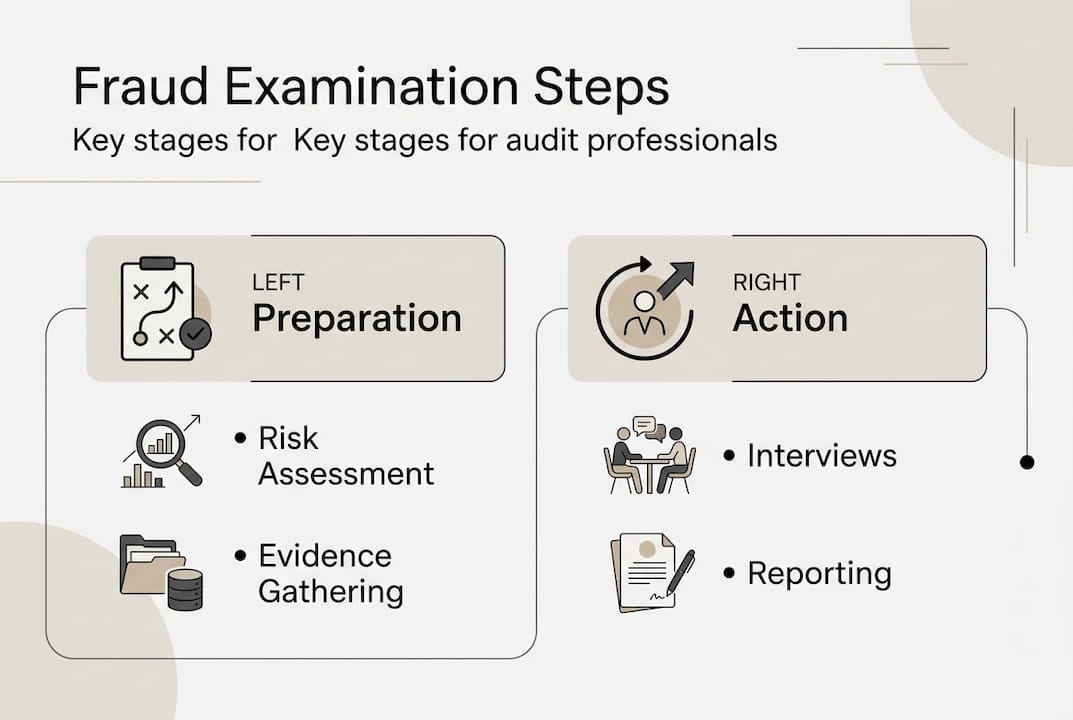
Start by incorporating fraud risk assessments into your annual audit planning. Identify high-risk areas based on factors like management override opportunities, complex transactions, and weak segregation of duties. During fieldwork, look beyond compliance checklists to examine behavioral red flags. Does management pressure employees to meet unrealistic targets? Are there unusual relationships between vendors and purchasing staff? These soft signals often precede hard evidence.
Brainstorming sessions with your audit team sharpen fraud detection capabilities. Gather your team before each engagement to discuss potential fraud schemes specific to that client or department. Consider how someone could exploit weaknesses in controls. This exercise primes your thinking and helps you design targeted tests.
Professional skepticism goes beyond healthy doubt. It means actively questioning management representations, seeking corroborating evidence, and following up on inconsistencies. When reviewing expense reports, don’t just verify receipts exist. Look for patterns like repeated amounts just below approval thresholds or weekend travel to unusual locations.
Pro Tip: Prime yourself before each audit by reviewing recent fraud risk internal cases in similar organizations. This mental preparation helps you recognize schemes faster when you encounter suspicious activity.
Active detection methods include:
Anonymous hotlines for employees to report concerns
Surprise audits of high-risk areas like cash handling
Data analytics comparing current period trends to historical patterns
Management and employee interviews focusing on pressure and opportunity
Internal audit departments should review key fraud issues auditors prioritize annually to ensure coverage aligns with emerging risks. As schemes evolve, your detection methods must adapt. Fraud prevention best practices emphasize continuous learning and staying current with new techniques.
Nuances and challenges in fraud examination and detection
Management override represents one of the most challenging fraud risks you’ll face. Even strong controls can be circumvented by executives who pressure subordinates or manipulate processes. Auditing standards presume this risk exists in every organization, requiring you to design procedures specifically addressing override scenarios. Look for unusual journal entries, especially near period end, and transactions lacking proper business rationale.
Distinguishing fraud from error hinges on intent, which is notoriously difficult to prove. Research on fraud detection shows that intent cues include concealment efforts, personal benefit to the perpetrator, and repeated patterns suggesting deliberate action. A single miscalculation might be error. Systematic manipulation of reserve accounts benefiting management bonuses signals fraud.
Experimental evidence reveals that priming auditors with fraud cues and increasing accountability significantly improve detection performance. When you consciously think about fraud possibilities before examining evidence, your brain processes information differently. You notice inconsistencies that might otherwise slip past. Accountability mechanisms like peer review and documentation requirements further enhance detection rates.
Emerging AI and machine learning tools offer promising detection capabilities. AI aids fraud detection through ensemble methods that outperform classic statistical approaches in financial statement fraud detection. These algorithms identify complex patterns across multiple variables simultaneously, flagging anomalies for human review. However, practitioners must combine AI insights with professional judgment, especially for novel schemes that fall outside training data.

Attribute | Classic Auditing | Fraud Examination |
Primary objective | Financial statement accuracy | Uncovering fraudulent activity |
Scope | Risk-based sampling | Comprehensive investigation |
Evidence standard | Reasonable assurance | Legal defensibility |
Timeline | Scheduled engagements | Event-driven response |
Outcome | Audit opinion | Legal action or remediation |
Pro Tip: When evaluating organizational red flags, pay attention to behavioral indicators like management living beyond apparent means, unusual vendor relationships, or employees refusing to take vacations. These soft signals often precede financial evidence.
The challenge with AI tools is knowing when to trust algorithmic outputs versus human intuition. Detecting fraud using AI in procure-to-pay processes demonstrates how technology excels at high-volume transaction analysis. Yet experienced auditors still catch sophisticated schemes through contextual understanding and professional skepticism. The optimal approach combines both strengths.
Key steps for balanced detection:
Use AI to screen large datasets and identify statistical anomalies
Apply human judgment to evaluate flagged items in business context
Investigate red flags through interviews and document review
Corroborate findings with multiple evidence sources
Consult forensic specialists for complex or high-stakes cases
Recent research on fraud detection confirms that while machine learning ensembles outperform traditional methods in controlled studies, real-world application requires careful calibration. Algorithms trained on historical fraud may miss emerging schemes. Your role as an auditor includes staying current with both technological tools and evolving fraud tactics.
Applying fraud examination insights in audits and compliance programs
Internal audit departments increasingly integrate fraud risk governance assessments into their annual plans. This means evaluating whether your organization has appropriate anti-fraud controls, ethical tone at the top, and reporting mechanisms. Rather than waiting for fraud to occur, you proactively assess prevention and detection capabilities. This shift from reactive to proactive stance strengthens overall control environments.
Internal auditors assess organization-level fraud risk governance to strengthen controls, while external audits focus more on skepticism during financial statement reviews. CFEs conduct full investigations when fraud is suspected or detected. Understanding these distinct roles helps you collaborate effectively and know when to escalate issues beyond your scope.
Role | Primary Focus | Investigation Depth | Reporting |
Internal Auditor | Risk assessment and control testing | Limited, refers complex cases | Management and audit committee |
External Auditor | Financial statement accuracy | Moderate, focuses on material misstatement | Shareholders and regulators |
Fraud Examiner | Fraud detection and investigation | Comprehensive forensic analysis | Legal counsel and law enforcement |
To embed fraud examination techniques within your compliance and audit processes:
Conduct annual fraud risk assessments identifying high-risk areas
Include fraud-specific procedures in audit programs for vulnerable processes
Train staff on behavioral red flags and interviewing techniques
Establish clear escalation protocols when fraud is suspected
Coordinate with legal and HR on investigation protocols
Monitor fraud trends in your industry through professional networks
The risk assessment for auditors framework provides a structured approach to identifying and prioritizing fraud risks. Apply this methodology at both the entity and process levels. Entity-level risks include management override and financial reporting pressure. Process-level risks vary by function, from procurement kickbacks to payroll ghost employees.
Pro Tip: Build relationships with forensic accounting specialists before you need them. When you encounter a complex suspected fraud, having a trusted expert to consult saves time and ensures proper evidence handling. Consider forensic accounting training to understand what specialists look for during investigations.
Collaboration between internal audit and fraud examination functions creates synergy. Your routine audit work may uncover anomalies that warrant forensic investigation. Conversely, fraud examiners can share lessons learned that inform your risk assessments and audit procedures. This knowledge transfer strengthens organizational defenses.
The forensic accounting investigation guide outlines how specialists approach evidence collection, witness interviews, and report preparation. Familiarizing yourself with these methods helps you preserve evidence when you stumble upon potential fraud. Simple actions like securing documents and limiting access to systems can make the difference between successful prosecution and lost evidence.
Enhance your fraud examination skills with expert CPE training
Taking your fraud detection capabilities to the next level requires ongoing education and practical training. Compliance Seminars offers specialized CPE courses designed for audit and compliance professionals seeking to strengthen their fraud examination skills. Our curriculum covers everything from foundational fraud schemes to advanced forensic techniques, delivered by instructors with Big 4 and law enforcement backgrounds.
Whether you prefer in-person seminars or convenient webinars, our 2026 CPE event calendar features sessions across multiple U.S. cities. Topics include fraud risk assessment, data analytics for anomaly detection, and interviewing techniques. For busy professionals, our internal auditor CPE webinars provide focused one to two hour sessions you can attend from your desk. The forensic investigative accounting course delivers comprehensive coverage of investigation methodologies and legal considerations. Participants consistently report that our practical, case-based approach helps them immediately apply new skills in their organizations.
Frequently asked questions
What are the key differences between fraud examination and regular auditing?
Fraud examination focuses specifically on uncovering, investigating, and preventing fraudulent activities, while regular auditing assesses financial statement accuracy and internal control effectiveness. Fraud examiners gather evidence that holds up in legal proceedings and often work with law enforcement. Forensic investigative accounting training teaches the specialized techniques that distinguish fraud examination from standard audit procedures.
How can internal auditors effectively integrate fraud risk into their audits?
Start by conducting fraud risk assessments during annual planning to identify high-risk areas. Use brainstorming sessions to discuss potential schemes specific to each engagement. Apply professional skepticism throughout fieldwork, looking for behavioral red flags alongside documentary evidence. The fraud detection process for auditors provides a structured framework for incorporating fraud considerations into routine audit work.
What emerging technologies are changing fraud detection?
Machine learning ensembles and AI algorithms now identify complex patterns across large datasets, significantly improving detection accuracy compared to traditional statistical methods. These tools excel at screening high-volume transactions and flagging anomalies for human review. However, AI in fraud detection research emphasizes that human judgment remains critical for evaluating novel schemes and understanding business context. Detecting fraud using AI training helps auditors leverage these tools effectively.
What are the most common fraud schemes auditors should watch for?
Asset misappropriation schemes like expense reimbursement fraud and inventory theft are most common but typically involve smaller amounts. Financial statement fraud is less frequent but far more costly, often involving revenue recognition manipulation or concealed liabilities. Corruption schemes including kickbacks and bid rigging fall in between. Each industry has characteristic schemes, so staying current with trends in your sector improves detection effectiveness.
How does the CFE certification benefit audit and compliance professionals?
The CFE credential validates specialized knowledge in fraud prevention, detection, investigation, and legal aspects that complement traditional audit skills. It demonstrates commitment to anti-fraud expertise and often enhances career opportunities in internal audit, compliance, and risk management roles. The certification process covers fraud schemes, investigative techniques, and legal frameworks that strengthen your ability to identify and respond to fraud risks in any audit engagement.
Recommended
Comments